Commercial Domestic Hot Water & Recirculation Systems: Facility Troubleshooting Guide
A hot-water complaint is not automatically a failed water heater. The fastest diagnosis is to determine whether the problem is generation, distribution, recirculation, mixing or one fixture.
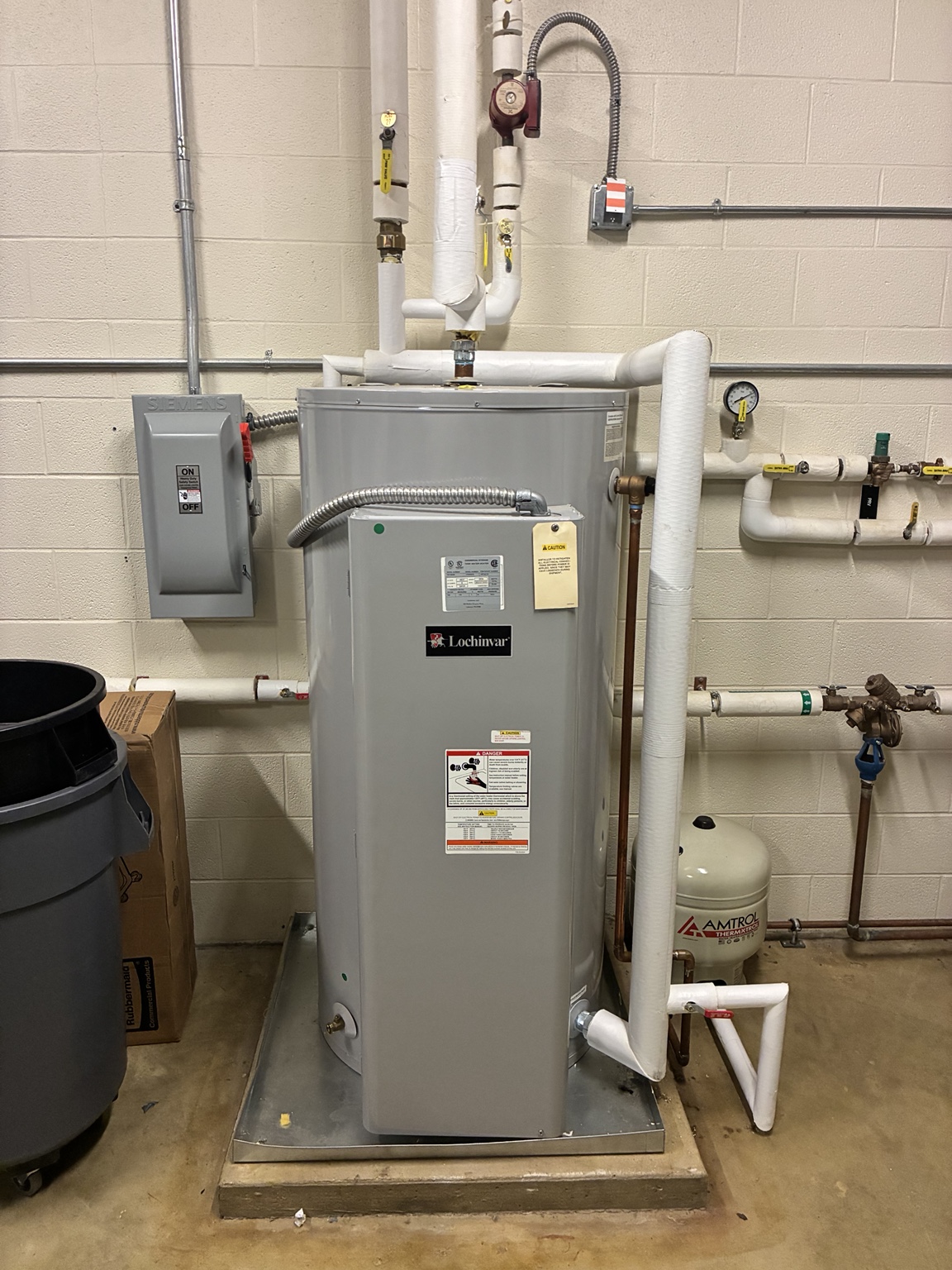
Cold water enters the heater, is heated and distributed to fixtures. A recirculation loop can continuously return hot water from remote parts of the building so users do not wait for the piping to warm up. Mixing/tempering devices may limit delivered temperature. A problem anywhere in that chain can feel like “the water heater is broken.”
Trace the system
1. Confirm the complaint
Is there no hot water, slow hot water, inconsistent temperature, or water that is too hot? Check more than one fixture and note the time of day.
2. Measure—do not guess
Use an appropriate thermometer at representative fixtures and compare readings. Be alert for scalding temperatures; do not intentionally expose occupants to hot water during testing.
3. Separate generation from distribution
If water leaving the heater is hot but distant fixtures are not, investigate recirculation, mixing, cross-connections and distribution before condemning the heater.
4. Check recirculation clues
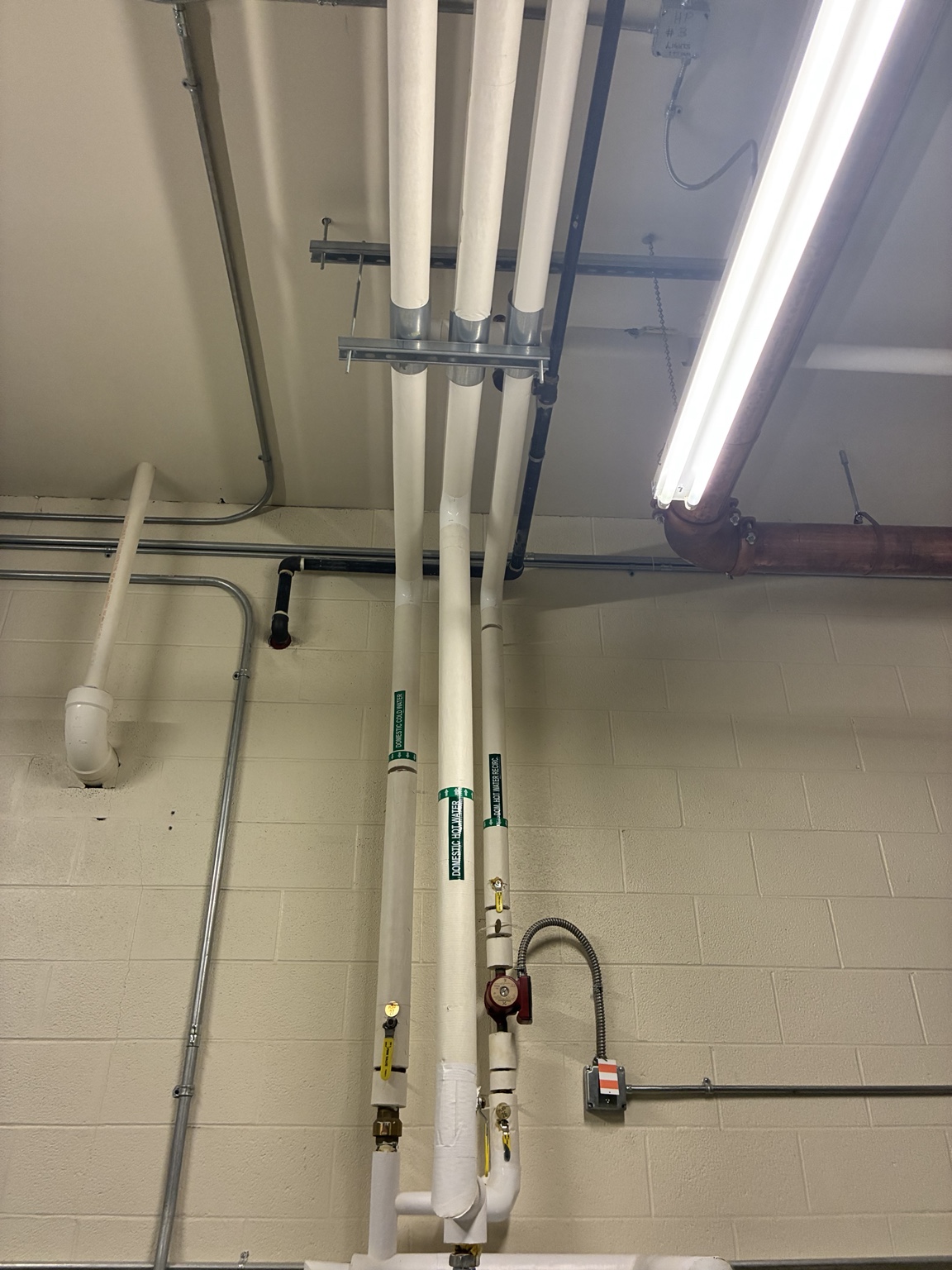
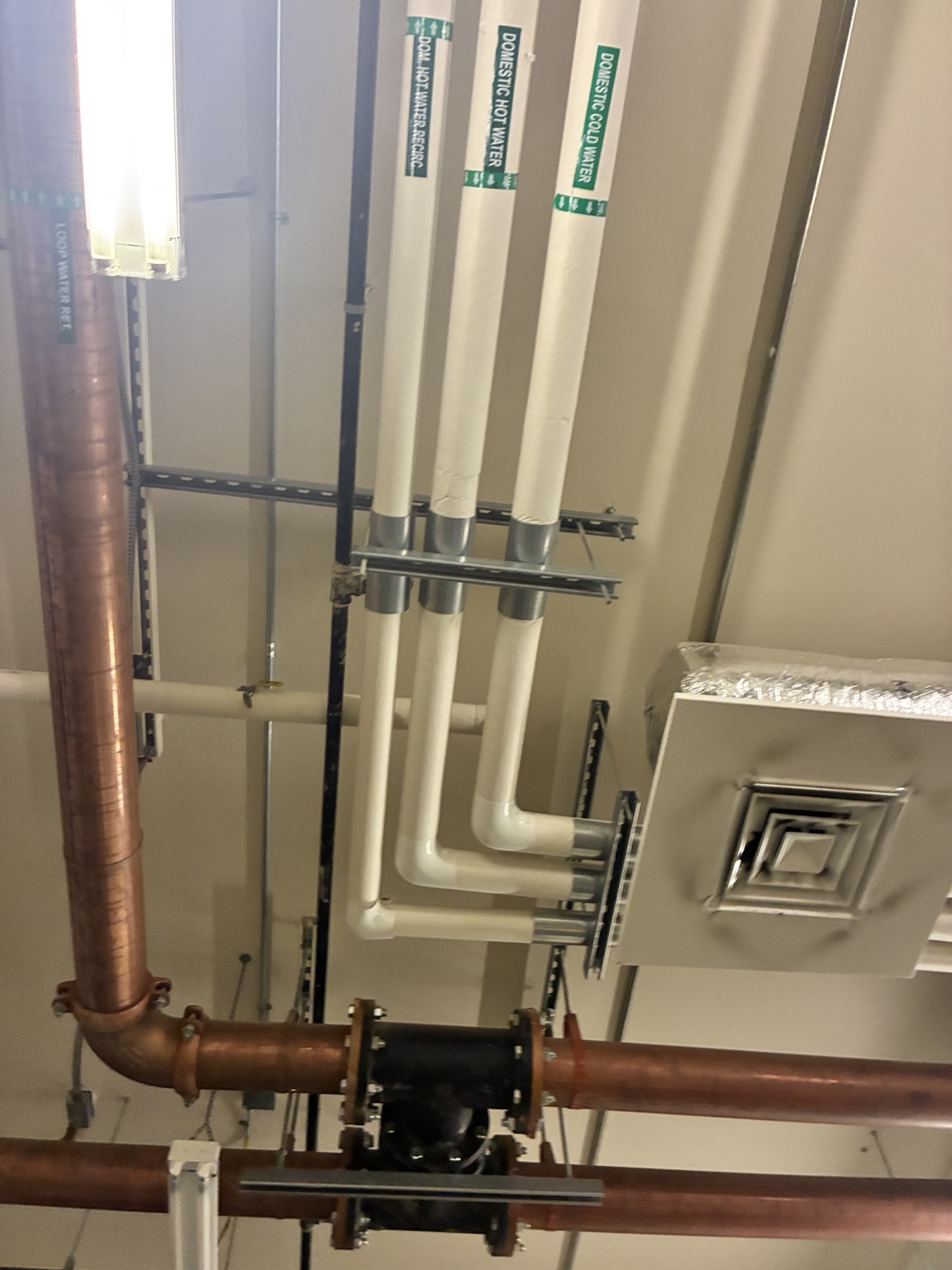
Record pump status, return-line temperature, BAS information if available, and whether the problem is worse after low-use periods. A failed recirculation path can create long waits even when the heater is working.
Symptom map
- No hot water anywhere: verify equipment status, power/fuel indications, setpoint and alarms; escalate burner, gas, combustion or internal electrical work.
- Hot water near heater but not far away: check recirculation status and return temperature.
- Only one fixture is wrong: suspect a local mixing valve, cartridge, stop or fixture issue before the central heater.
- Temperature swings: document when and where; mixing/tempering, recirculation and cross-connections are possible causes.
- Water too hot: take the condition seriously, restrict use if necessary and investigate controls/tempering promptly.
- Leak or relief discharge: do not cap or plug a relief outlet. Protect the area and call qualified service.
What to record in your CMMS
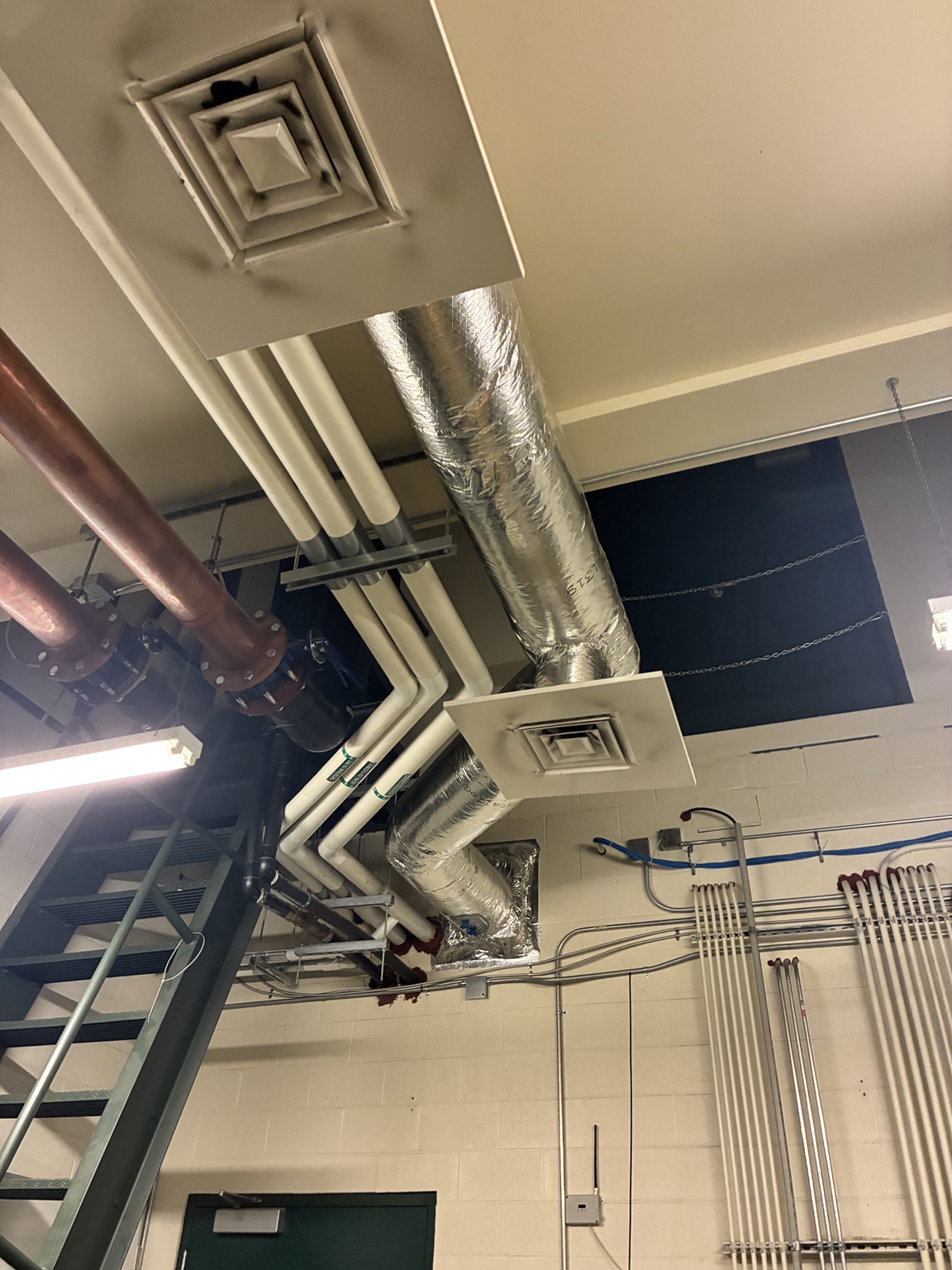
Heater model/serial, storage and delivery setpoints, measured fixture temperatures, recirculation pump information, mixing-valve model, normal return temperature, shutoff locations and service history. These records make future “no hot water” calls dramatically faster.
BuildingWrench provides general educational information for commercial-facility maintenance. Manufacturer instructions, applicable codes, site procedures, water-treatment requirements, and required trade qualifications take priority.