Portable Fire Extinguisher Inspection: Monthly Checks for Maintenance Technicians
A portable extinguisher is life-safety equipment. The maintenance technician's job is to make sure it is present, accessible, apparently charged and ready for use — and to hand service work to qualified fire-protection personnel.
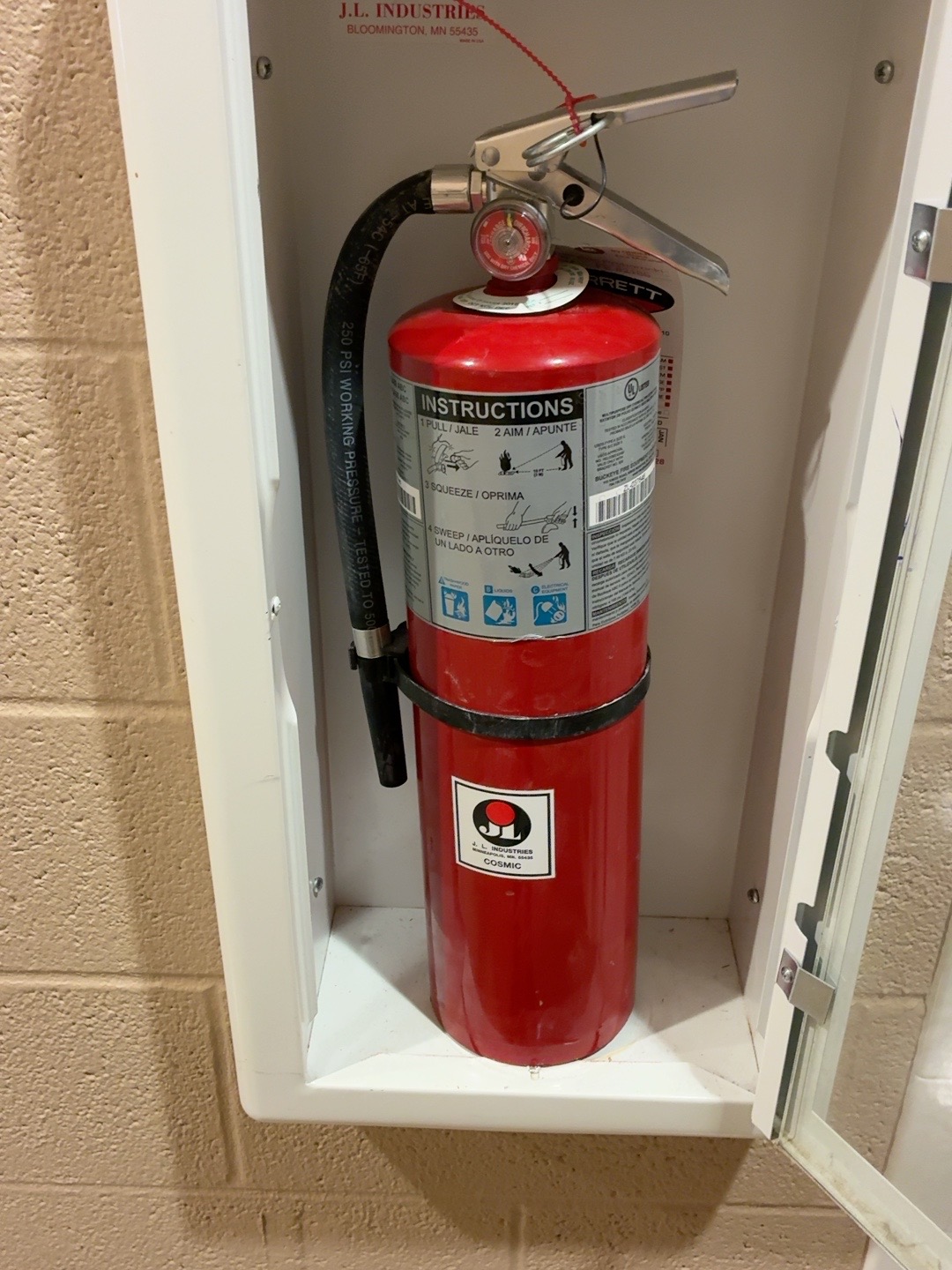
How often to check
Monthly visual inspection
For workplaces covered by OSHA's portable-extinguisher rule, visually inspect portable extinguishers monthly. Make the check part of a recurring facility walk or CMMS inspection so missed units are visible.
Annual maintenance
OSHA requires an annual maintenance check. This is more than the technician's monthly walk-by inspection and should be completed by personnel qualified for the required extinguisher maintenance.
Additional interval maintenance and testing
Some extinguisher types require internal maintenance and hydrostatic testing at specified intervals. The interval depends on extinguisher type; do not use a blanket age rule for every extinguisher.
What to check each month
1. Location and access
Confirm the extinguisher is in its designated location, readily accessible, visible or properly identified, and not blocked by furniture, storage, equipment or a difficult-to-open cabinet.
2. Pressure or charge indication
For an extinguisher with a pressure gauge, confirm the pointer is in the manufacturer's operable range — commonly the green zone. Do not assume every extinguisher type uses the same charge indicator.
3. Pin and tamper seal
Confirm the pull pin is present and the tamper indicator or seal is intact. A missing pin, broken seal or evidence of operation needs follow-up rather than simply installing a new seal and walking away.
4. Hose and nozzle
Look for cracks, cuts, deterioration, loose connections or an obstructed discharge opening. Do not probe into or dismantle the valve or hose assembly as part of a routine visual inspection.
5. Cylinder, handle and mounting
Look for dents, corrosion, leakage, heat/fire exposure, damaged handles, damaged threads or other mechanical injury. Confirm the extinguisher is secure in the intended bracket or cabinet.
6. Label and operating instructions
Make sure the operating instructions/nameplate are legible and facing outward where practical. Confirm the extinguisher has not obviously been swapped with an incompatible location or hazard without authorization.
7. Inspection and service record
Record the monthly inspection according to your site process. Check the annual-maintenance record/tag and any service markings so overdue professional maintenance or testing is not missed.
When to call a qualified fire-protection service company
• The gauge or charge indicator is outside its operable range.
• The extinguisher has been used or partially discharged.
• The pin or tamper seal is missing/broken and the cause is not clearly documented.
• You find leakage, significant corrosion, dents, heat/fire exposure, damaged threads, a damaged valve/handle, cracked hose, blocked nozzle or missing parts.
• Required annual maintenance or interval testing is overdue or cannot be verified.
• The extinguisher type, rating, condition or suitability for the location is uncertain.
• The unit needs recharge, internal maintenance, hydrostatic testing, repair or replacement.
• Your site procedure, fire marshal/AHJ or applicable code requires specialist involvement.
Do not leave a questionable extinguisher silently in service. Follow the site's impairment/replacement procedure and ensure required fire protection remains available while a unit is removed for service.
Annual maintenance, six-year maintenance and hydrostatic testing
OSHA requires annual maintenance of workplace portable extinguishers. For certain stored-pressure dry-chemical extinguishers that have a 12-year hydrostatic-test interval, OSHA also requires applicable maintenance every six years; non-refillable disposable dry-chemical containers are exempt from that six-year requirement. Hydrostatic-test intervals vary by extinguisher type — common intervals include 5 or 12 years — so verify the extinguisher type and service record rather than judging by age alone.
Leave a useful maintenance record
Record the extinguisher ID/location, inspection date, accessibility, gauge/charge indication where applicable, pin/seal condition, hose/nozzle condition, visible cylinder condition, tag/service status, deficiencies found, action taken and who owns the follow-up. A completed inspection means the inspection occurred; it does not override a defect or certify specialist service.
References and further reading
Use the installed extinguisher's manufacturer instructions, your site's fire-protection program and local requirements first. These public references support the inspection and maintenance intervals described above.
- OSHA 29 CFR 1910.157 — Portable fire extinguishers
- OSHA portable-extinguisher monthly inspection checklist
Related guides
General educational guidance for commercial-facility staff. Manufacturer instructions, site procedures, applicable requirements, the authority having jurisdiction and trade qualifications take priority. Fire & Life Safety guides intentionally contain no affiliate shopping recommendations.