Water Dispenser Leaking: Safe First Response for Maintenance
A leaking bottleless water dispenser can involve pressurized water, a filter, internal tubing, a hot tank and electricity. Maintenance's first job is to limit damage and identify the leak safely—not start opening powered equipment.
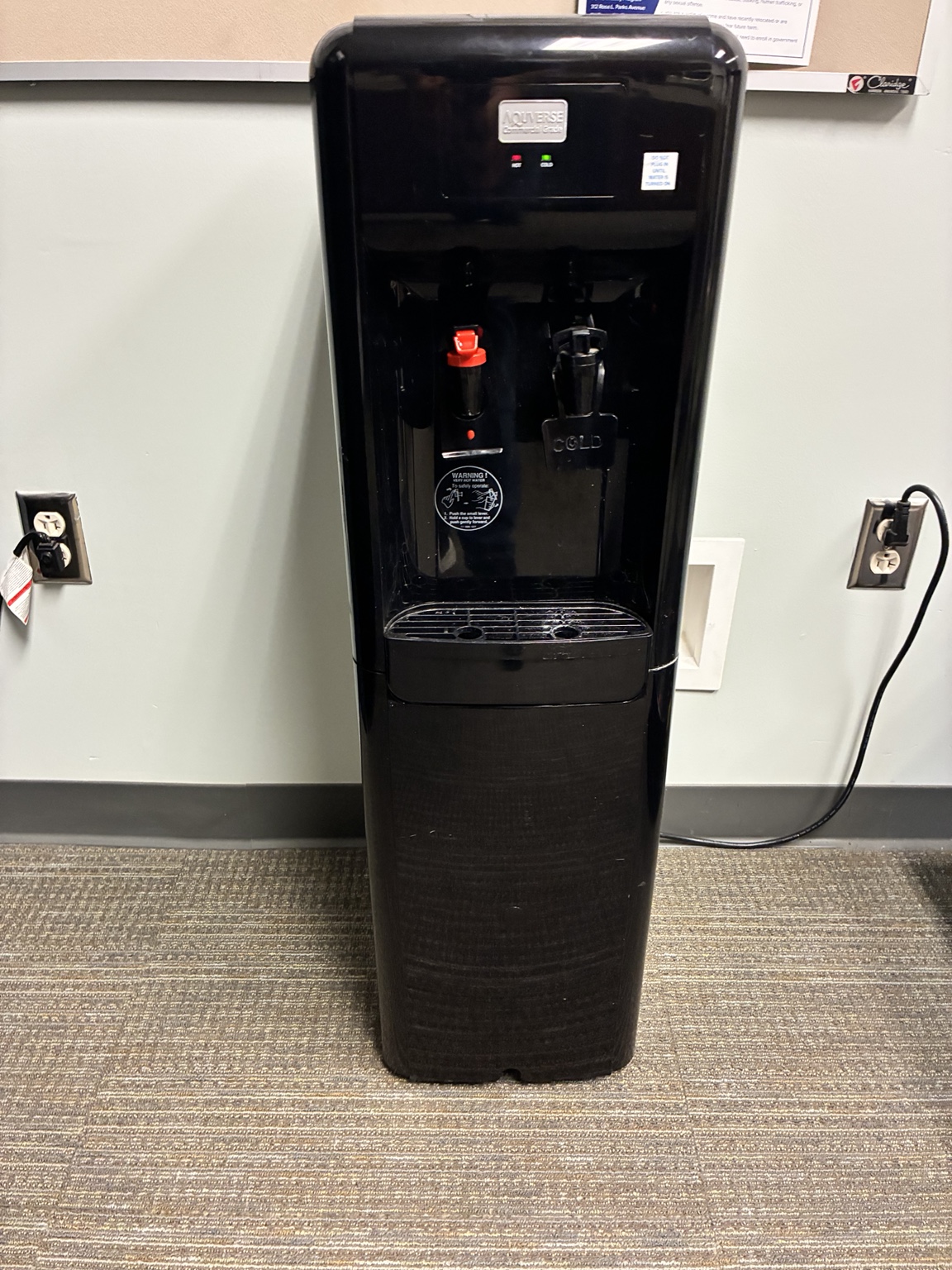
Protect the area, stop use, close the dispenser's known water-supply shutoff if it can be identified and operated safely, and disconnect power only when the plug and surrounding area are dry and safely accessible. Then dry the area and observe where fresh water first appears.
What maintenance should do
1. Protect the area
Take the dispenser out of service, control slip hazards and protect nearby finishes or equipment. Photograph the leak before cleanup if doing so does not delay safety actions.
2. Isolate the water supply
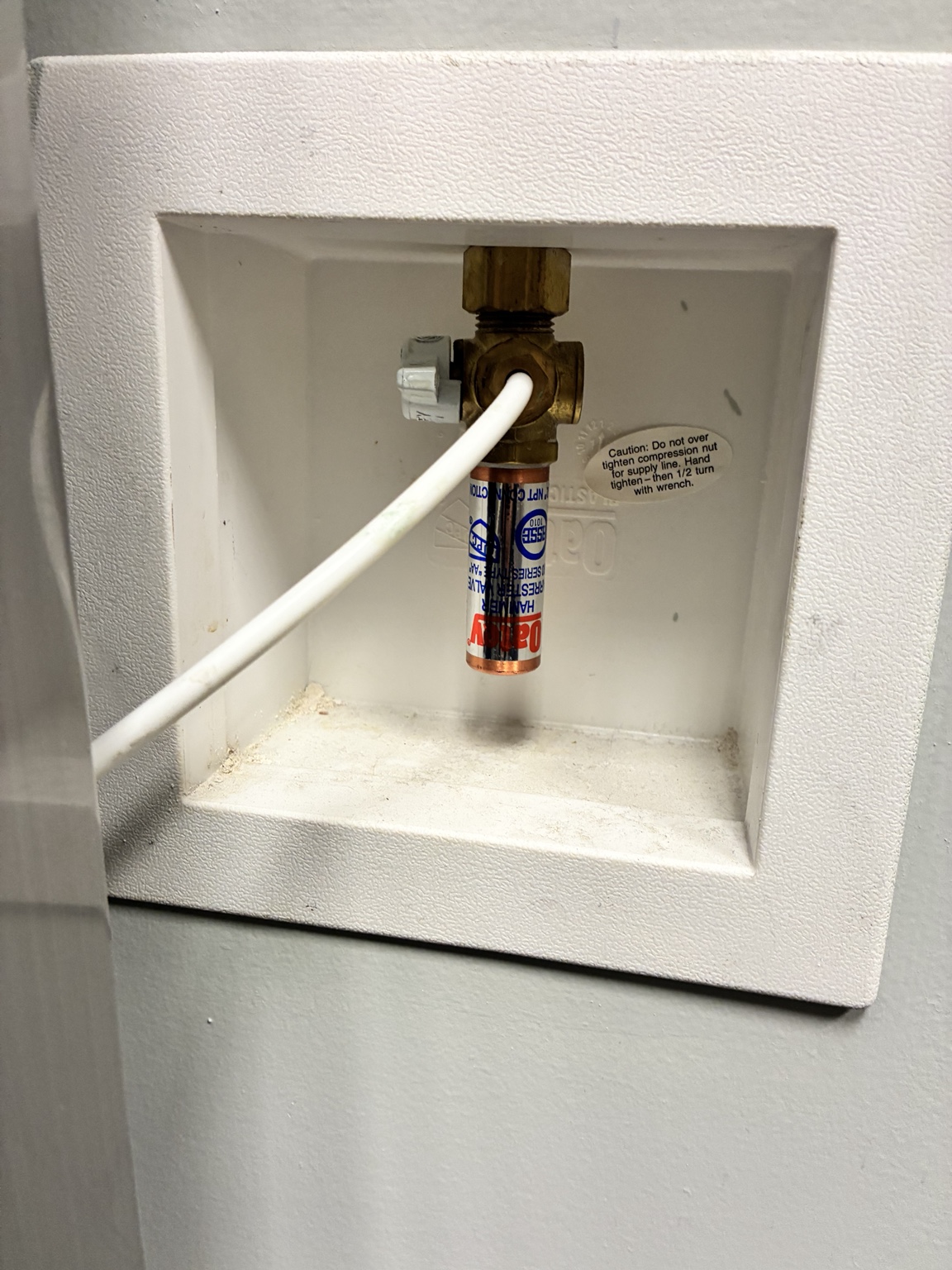
Locate the dedicated, positively identified shutoff serving the dispenser. Close it gently according to the valve's design and site procedure. Do not force a stuck valve or shut an unidentified building valve.
3. Address power safely
If the cord, plug, receptacle and floor around them are dry and safely accessible, follow the manufacturer/site procedure for taking the unit out of service. If water is near electrical parts, do not touch the unit; escalate for qualified electrical isolation.
4. Dry, then observe
Once safe and isolated, dry accessible surfaces. Look for the first place moisture reappears. That first wet point is more useful than the puddle on the floor.
5. Record the source and handoff
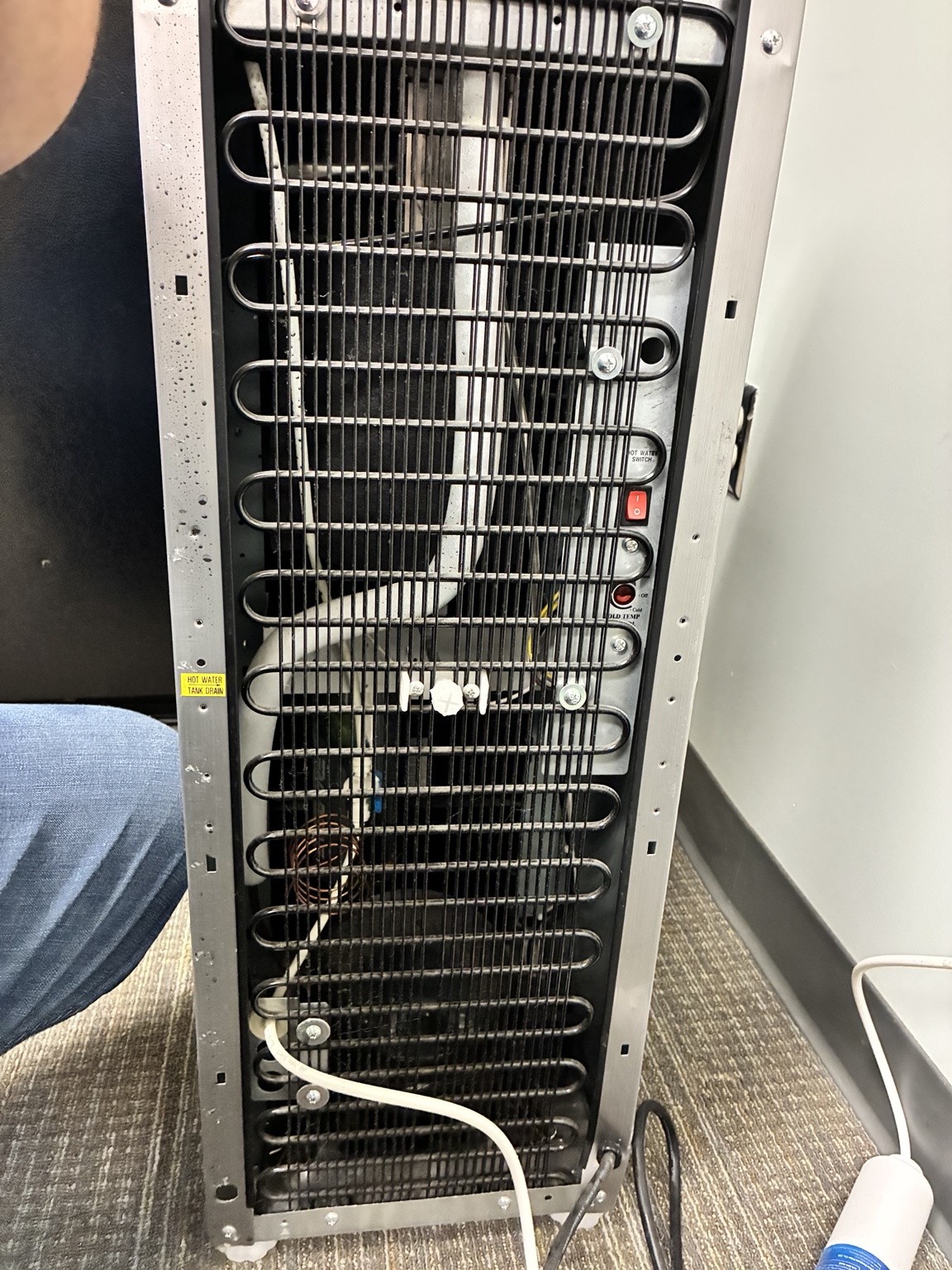
Document whether the leak appears to be at the supply connection, filter connection, accessible tubing, dispenser fitting, drain/drip tray, internal tank or cabinet. Record model/serial information before ordering parts or calling service.
What to observe
- Does it leak continuously, only while dispensing, or only after use?
- Is the water hot, cold or room temperature?
- Is the filter or a push-fit connection wet?
- Is water coming from the supply valve or tubing?
- Is the drip tray overflowing rather than the unit leaking?
- Is moisture coming from inside the cabinet?
- Did the leak begin after a filter change or service?
When to call qualified service
- Water is near electrical components or the receptacle.
- The leak comes from an internal hot tank, refrigeration section or inaccessible internal tubing.
- The supply valve will not close, leaks when operated or cannot be positively identified.
- A fitting or filter continues leaking after correct installation.
- The unit has physical damage, unusual heat, burning odor or repeated electrical trips.
- You cannot prove the source safely.
Document before returning to service
Record the leak location, what was isolated, photos, model/serial number, parts changed, and the results of a sustained leak check. Never return a unit to service while an active leak remains.
BuildingWrench provides general educational information for commercial-facility maintenance. Manufacturer instructions, applicable codes, site procedures, and required trade qualifications always take priority.