Commercial Toilet Keeps Running? How to Troubleshoot a Flushometer
If a manual commercial flushometer will not shut off, close the control stop first. Common causes include a blocked metering bypass, debris under the diaphragm, damaged internal parts, the wrong repair kit, or inadequate supply pressure.
If a commercial toilet will not stop running, close the control stop first. The most common causes are debris in the flushometer, a restricted diaphragm bypass, damaged internal parts, or the wrong repair kit.
Confirm the valve before opening it
Internal-parts checks here apply to an exposed manual diaphragm flushometer. Tank toilets, piston valves and sensor-operated models require their own instructions. Identify the brand, series, toilet or urinal, and marked flush volume before choosing a manual or kit.
If trained and authorized, gently close the valve’s control stop as its manual directs. Never force a seized stop. If flow does not stop, keep the valve assembled and have authorized personnel arrange safe isolation. Do not loosen a pressurized cover.
Match the symptom before you touch anything
Good maintenance starts by describing what the system is actually doing. Use the pattern below to decide where to look first.
| What you see | What it points toward | First move |
|---|---|---|
| Continuous full flow | Blocked bypass, debris, damaged relief assembly | Shut off water; inspect and clean internals. |
| Flush lasts too long | Restricted bypass or wrong-volume parts | Verify kit and metering path. |
| Weak flush | Stop too closed, wrong kit, poor supply | Adjust stop gradually; compare nearby fixtures. |
| Handle leaks/sticks | Worn handle assembly | Use correct handle repair kit. |
Tools and preparation
What to bring
- Flat-blade screwdriver
- Smooth-jaw adjustable wrench
- Rags or towel
- Correct diaphragm/inside-parts kit
Before you start
- Confirm the exact location and complaint.
- Photograph labels, settings, and error codes before changing anything.
- Know how to isolate water, power, or the affected area if needed.
- Follow site-specific PPE, lockout/tagout, ladder, roof, and access procedures.
Step-by-step
Identify the valve
Record manufacturer, series, toilet/urinal type, and flush volume before ordering parts.
Close the control stop
Close gently as the manual directs. Operate the handle and verify flow stops before loosening any cover; if it continues, do not dismantle.
Relieve pressure and open the top
Only after verifying isolation, operate the handle as directed to relieve pressure and catch residual water. Follow the exact cover-removal sequence; never loosen the cover to test for pressure.
Inspect the diaphragm assembly
Look for grit, scale, torn rubber, distorted plastic, and debris on sealing surfaces.
Clean the metering path
Rinse serviceable parts. Never enlarge the small bypass opening.
Install the correct kit
Match manufacturer, fixture type, and flush volume; seat parts naturally.
Restore water and test
Open the stop slowly, check for leaks, and test several flushes.
Common mistakes
- Buying a kit because it looks similar
- Using toothed pliers on chrome
- Forcing a stuck control stop
- Poking the bypass with wire or a drill bit
- Opening the control stop fully by default
Manufacturer-specific field notes
What to photograph before ordering parts
- Full flushometer from the side
- Brand stamp on valve body or cover
- Any flush-volume marking
- Existing diaphragm/inside kit after removal
- Control-stop and handle style
When to stop and hand it off
- Control stop will not shut off or is leaking
- Valve body or supply piping is cracked/corroded
- You cannot positively identify the correct parts
- Several fixtures suddenly have pressure problems
- Correct internal service does not stop the run-on
Frequently asked questions
Why does a clogged bypass make it run?
The bypass meters water into the upper pressure chamber so the diaphragm can close on time.
Are toilet and urinal kits interchangeable?
Do not assume so; flush volumes and metering parts can differ.
Should the control stop be fully open?
No. Open only enough for reliable fixture performance.
Can I use a paper clip to clear the bypass?
No. Use the manufacturer-approved cleaning method without enlarging the opening.
If it still runs after service
Why does it still run after a new diaphragm?
A new part does not rule out an incompatible kit, debris in the metering path, a relief valve that is not seated, a damaged inside cover or insufficient supply pressure. Verify brand, series, fixture type and flush volume first. If correct isolation and assembly cannot be confirmed, keep the fixture out of service and call a plumber.
What if several flushometers change at the same time?
Record which fixtures are affected and when it started. A shared pressure change calls for a qualified supply assessment. Replacing every diaphragm may miss the cause. Do not experiment with building regulators or main valves.
How do I verify the repair?
After restoring supply as the manual directs, observe several complete flushes. Each should shut off on its own with dry cover/connections and no bowl overflow. Record the part number and any remaining failure. There is no universal flush duration for all models.
Useful service record
Brand/series, fixture type, marked flush volume, kit part number, whether the stop isolated flow, inside-cover condition and results of repeated complete flushes.
Related BuildingWrench guides
BuildingWrench provides general educational information for commercial-facility maintenance. Manufacturer instructions, applicable codes, site procedures, and required trade qualifications always take priority.
Tools that fit this task
Use what you already own first. These affiliate links may earn a commission at no extra cost to you. Confirm model and compatibility before buying.

Smooth jaws help protect fittings; verify jaw opening fits the specific fitting.
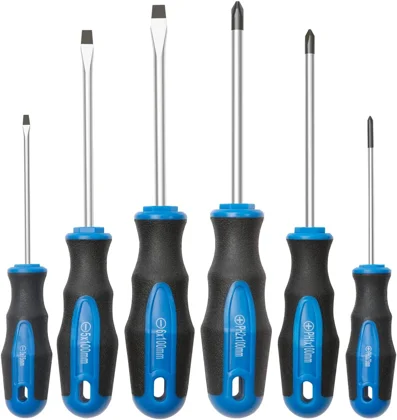
Use the bit that fully fits the fastener; use hand control for small adjustments.

Dry accessible surfaces so fresh leakage is easier to identify; not for hazardous spill cleanup.
Sloan Royal reference: Royal manual diaphragm repair and maintenance guide, item 6 (printed page 18), available in manufacturer documents. Do not transfer Royal parts or procedures to another series without checking its manual.