Facility Profile & Quick Reference
Building facts, major systems and record locations.
80 free printable facility-management documents, checklists, logs and working templates.
80 free downloads · No account required
Facility requirements vary by occupancy, jurisdiction, equipment, insurer, employer policy and authority having jurisdiction. Customize each document to your site and use qualified specialists where required.
Building facts, major systems and record locations.
Fresh-eyes inspection findings, priorities and follow-up.
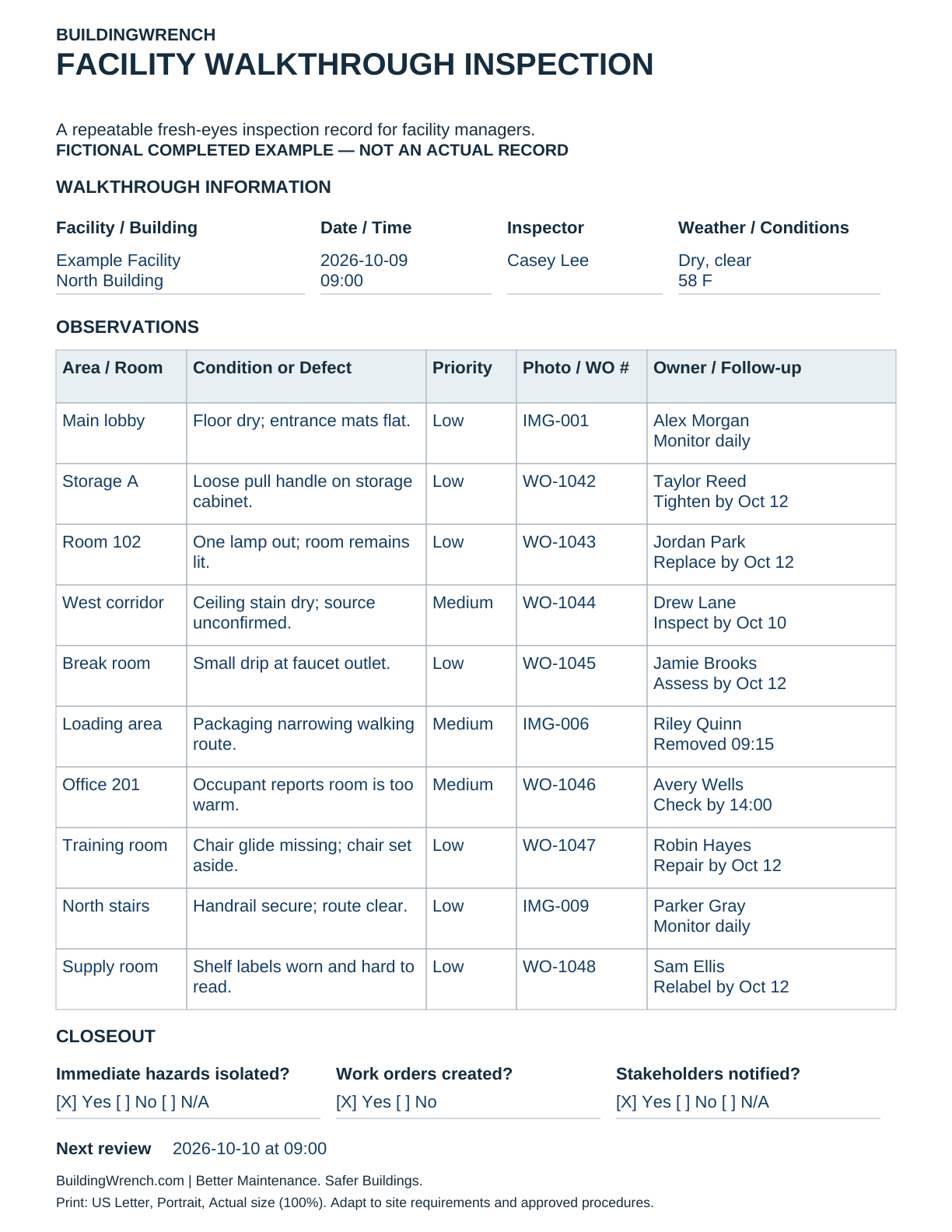 View full-size fictional example
Capture stakeholder concerns, observations and commitments.
Apply consistent P1-P4 maintenance triage.
Assign owners, due dates and closeout to meeting actions.
Transfer open risks, outages and commitments.
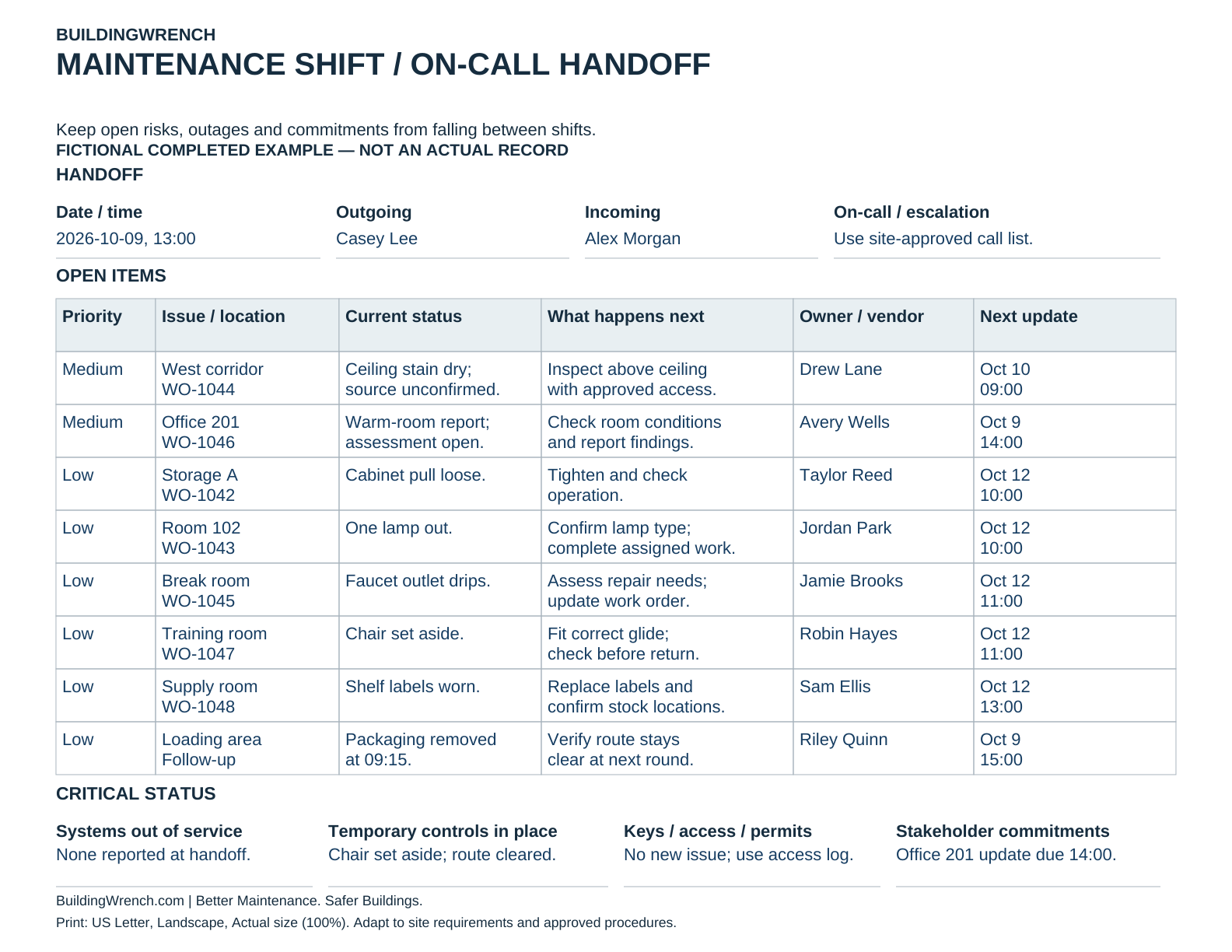 View full-size fictional example
Year-end review of condition, risk, cost and priorities.
Build a realistic weekly schedule before promising completion dates.
Give the crew one clear daily assignment list and a shared check-in plan.
Turn an aging work order into a specific next action with an owner.
Check that a completed repair has enough evidence to stay closed.
Investigate recurring breakdowns without confusing assumptions with findings.
Compare realistic repair and replacement options on the same basis.
Decide which spare parts deserve shelf space and budget.
Send a complete warranty request and track the vendor response.
Give bidders the same requirements so quotes are easier to compare.
Prepare the information a service technician needs before arriving.
Match a service invoice to approved work before forwarding it for payment.
Turn a missed vendor commitment into a measurable recovery plan.
Catch missing decisions before a small project is scheduled to start.
Record the cost and schedule impact of added work before it is approved.
Confirm event requirements early enough to staff and set up the space.
Return an event or project space to its agreed condition.
Give leadership a concise view of service results and decisions needed.
Explain why a facility budget line changed and what happens next.
Prepare a clear occupant notice for a planned service interruption.
Keep decisions moving while the facility manager is away.
Make missed preventive maintenance visible and assign a recovery plan.
Prepare a repeatable job so the next technician starts with the right information.
Give a new technician a supported route from orientation to assigned work.
Convert cleaning concerns into location-specific corrections and rechecks.
Track model, serial, location, warranty and criticality.
Keep repair and PM history for an individual asset.
Build a PM master list around actual assets and requirements.
Identify high-consequence systems and recovery priorities.
Track warranty coverage, dates and claim contacts.
Track critical spares, reorder points and cycle counts.
Record consumption and flag unusual readings.
Directory plus service-performance notes.
Track scope, cost, renewal and notice deadlines.
Compare scope, exclusions, warranty, schedule and evaluated cost.
Coordinate contractor arrival, work area and closeout.
Track incomplete or defective work to verified closure.
Collect O&M manuals, warranties, as-builts, training and handoff records.
Capture changes that affect drawings, PMs, assets or emergency plans.
Compare budget, commitments, actuals and forecast.
Compare capital needs by risk, impact, condition and cost.
Make deferred work and risk visible for future planning.
Document drill timing, observations, accountability and corrective actions.
Internal, responder, utility and critical vendor contacts.
Review emergency reporting, evacuation, accountability, roles and plan currency.
Review major fire hazards, ignition controls and assigned responsibilities.
Track deficiencies, interim measures and verified closeout.
Record outage scope, controls, notifications and restoration.
Capture facts and initial actions without assigning blame.
Plan weather and seasonal preparation before conditions hit.
Track leak source, affected materials, drying and closeout.
Build leak history by location, weather and repair.
Document positively identified shutoffs and map references.
Record comfort, odor, moisture and indoor-environment concerns.
Record visible access barriers for follow-up and qualified review.
Track actual inspection, test, certification and renewal requirements.
Track keys, cards, access and returns.
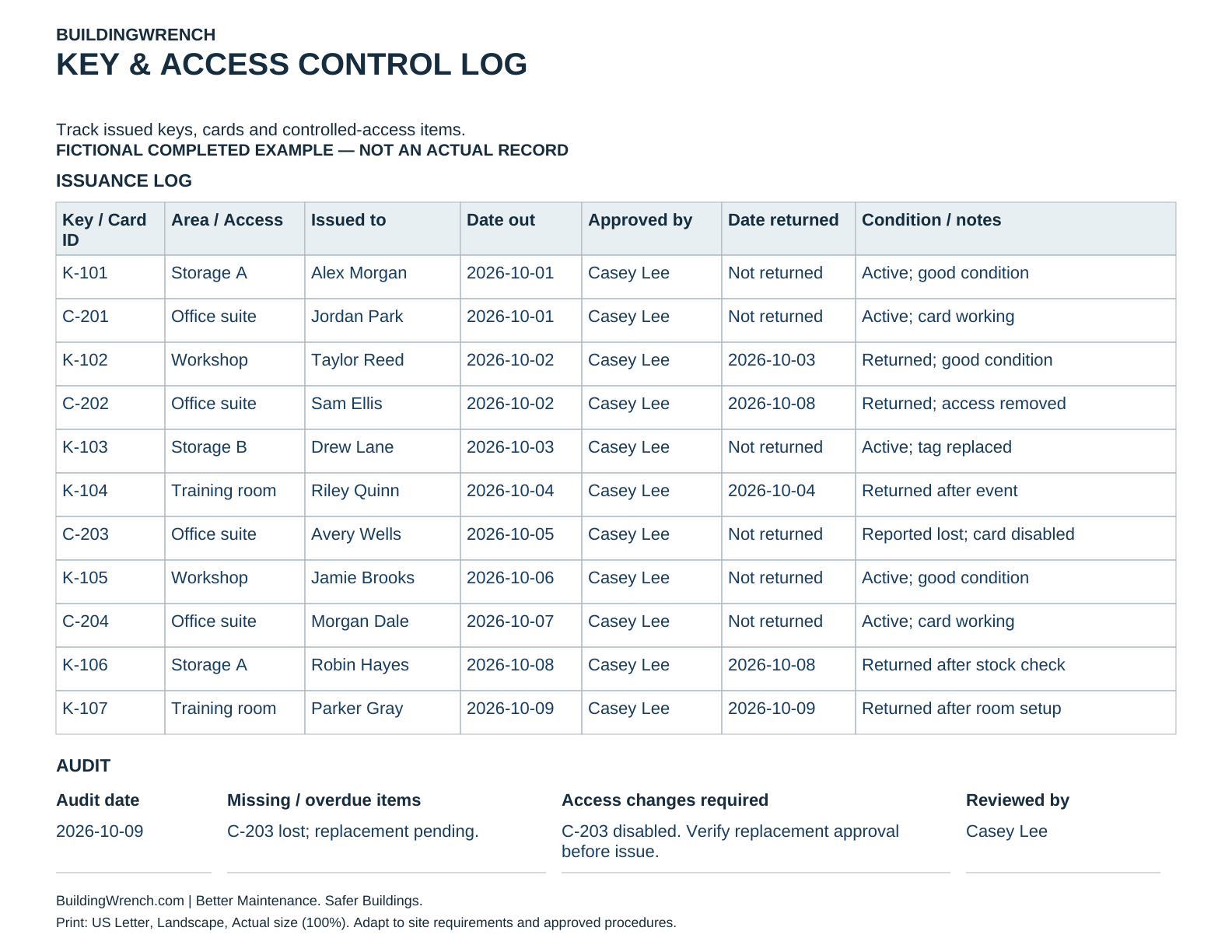 View full-size fictional example
Track training, authorization and development needs.
Index workplace chemicals and current SDS locations.
Free working documents for coordinating emergencies, recording decisions and managing recovery. Download, adapt and use them with your site-specific plans.
Read the companion incident-management guides
Assign a response lead and backups before calls and responsibilities scatter.
Keep one factual sequence of reports, actions and approvals.
Prepare consistent initial, progress, relocation and all-clear messages.
Track the evidence needed to release a restricted building or area.
Manage the recovery work that continues after the leak stops.
Assign system checks so returning power does not become a premature all-clear.
Connect measured room conditions to operating and relocation decisions.
Keep impairment responsibilities, notifications and restoration evidence together.
Coordinate the plumber, cleanup specialist and occupied-building decision.
Give every image a location and connect it to the recovery record.
Give an emergency contractor the information needed for an effective first visit.
Describe observed damage and request a measurable corrective response.
Keep urgent spending attached to an approved purpose and owner.
Move findings from an inspection report to verified closure.
Capture what needs to change before the same incident happens again.
BuildingWrench Pro brings guides, QR asset history, service documentation, and Ask Steve AI-assisted guidance together for maintenance technicians and facility teams. Available on the App Store for $14.99.
Download BuildingWrench Pro