Door Closer Slamming? Adjust Sweep & Latch Speed
A commercial door closer that slams through most of its travel has a different symptom from one that only slams at the latch. Most hydraulic closers control sweep and latch speed separately, but valve locations and permitted adjustment ranges depend on the model.
Inspect before turning a valve: Check for oil leakage, loose body/arm mounting, hinge binding and a dragging door. Adjusting speed cannot repair those faults.
Identify the exact closer and its adjustment instructions. Make one small permitted change at a time, keeping the original setting recorded. Never back a speed valve out or use backcheck as a substitute for closing-speed control.
Match the symptom before you touch anything
| What you see | What it points toward | First move |
|---|---|---|
| Slams through most travel | Sweep speed too fast | Slow sweep in tiny increments. |
| Slow then slams last inches | Latch speed too fast | Slow latch slightly. |
| Too slow everywhere | Sweep too restricted | Open sweep slightly. |
| Closer leaks oil | Failed closer | Replace closer. |
| Won't latch after adjustment | Latch too slow or alignment issue | Restore latch speed/check door. |
Tools and preparation
What to bring
- Correct screwdriver or hex key
- Small step ladder if needed
- Flashlight
- Marker or phone photo
Before you start
- Confirm the exact location and complaint.
- Photograph labels, settings, and error codes before changing anything.
- Know how to isolate water, power, or the affected area if needed.
- Follow site-specific PPE, lockout/tagout, ladder, roof, and access procedures.
Watch the sweep and the final latch zone
Observe a controlled cycle from a safe position. If the door moves too fast throughout the main closing travel, inspect the sweep setting after mechanical faults are excluded. If it accelerates only near closure, the latch zone needs attention. Use the manufacturer’s defined zones and adjustment limits rather than assuming every numbered valve has the same function.
After adjustment, test from several permitted opening positions. Verify reliable closure and positive latching without slamming, plus the opening’s required accessibility and egress operation. Do not solve resistance by leaving the latch ineffective.
Visible mounting movement needs the loose-arm inspection. A door catching the frame needs alignment checks. Use the photographed closer PM guide to document recurring conditions.
Step-by-step
Identify closer and valve labels
Look for S/L, sweep, latch, or numbered valves; positions vary.
Check door mechanically
Inspect hinges, latch, weatherstripping, and floor clearance before adjustment.
Record original settings
Take a photo or mark positions.
Adjust one valve at a time
Use very small changes, often about an eighth-turn.
Cycle the door repeatedly
Test from multiple opening angles.
Fine-tune latch speed
Final inches need enough energy to overcome latch/seals.
Verify life-safety function
Fire doors must self-close and positively latch.
Common mistakes
- Turning valves several full turns
- Removing an adjustment screw
- Adjusting closer to overcome hinge bind
- Confusing backcheck with closing speed
- Leaving fire door unable to latch
Closer labels vary by manufacturer
Commercial closers from manufacturers such as LCN, Norton/Rixson, dormakaba, Yale, and others may label speed valves differently. Look for the closer model and the actual adjustment markings before turning anything. Never assume that “1” and “2” mean the same thing across brands.
When to stop and hand it off
- Closer leaks oil
- Adjustment screw is damaged/missing
- Fire door will not close/latch
- Closer arm or mounting is damaged
- Door/frame badly misaligned
Frequently asked questions
Which screw controls final few inches?
Usually latch speed, but verify the model.
How much should I turn it?
Tiny changes; start around an eighth-turn.
Can tightening fix an oil leak?
No; visible oil usually means replacement.
What is backcheck?
Resistance near the fully open position, not normal closing speed.
Related BuildingWrench guides
What to document
Record closer model, mounting condition, oil leakage, which part of travel was too fast, original setting and each permitted change. Record closure/latching results and any remaining accessibility or egress issue.
BuildingWrench provides general educational information for commercial-facility maintenance. Manufacturer instructions, applicable codes, site procedures, and required trade qualifications always take priority.
Tools that fit this task
Use what you already own first. These affiliate links may earn a commission at no extra cost to you. Confirm model and compatibility before buying.
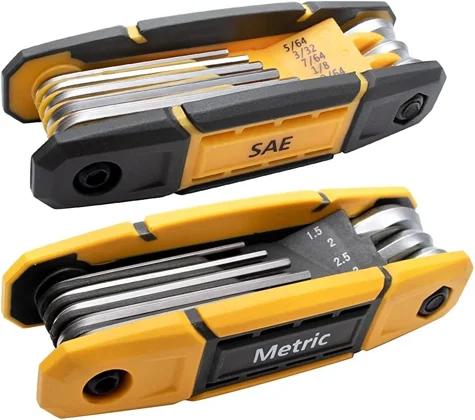
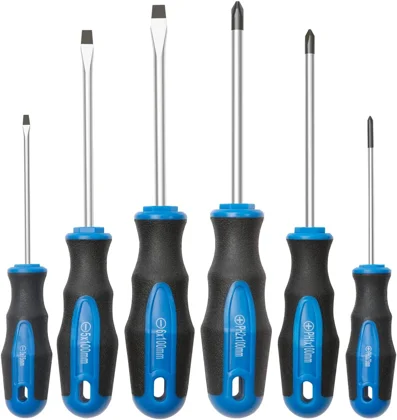
Use the bit that fully fits the fastener; use hand control for small adjustments.